
[ June 17, 2026 ]
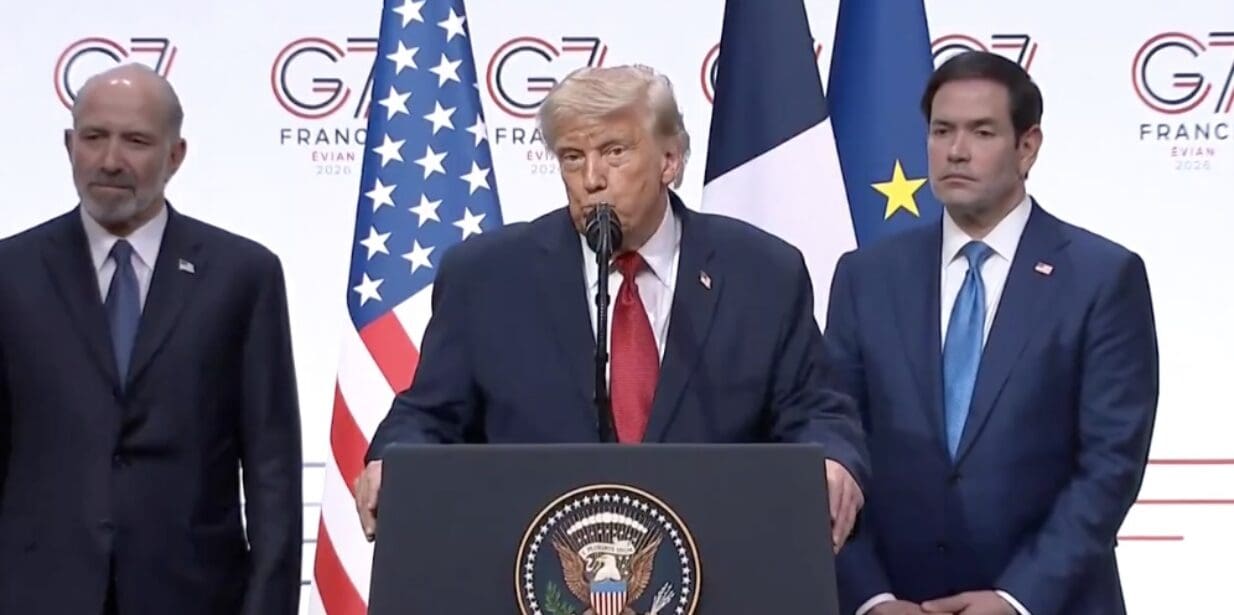
It is as I published earlier today…..
NEW:
This is the full text of MOU released by US
Islamabad Memorandum of Understanding between the U.S. and the Islamic Republic of Iran:
1 — The United States of America and the Islamic Republic of Iran and their allies in the current war are signing this MOU to declare the…
— Mossad Commentary (@MOSSADil) June 17, 2026
Trump official reads Iran deal to reporters: Here are the terms
By: Just The News, June 17, 2026:
A Trump administration official on Wednesday read the terms of the Iran deal to reporters.
The agreement addresses Iran’s nuclear program, ongoing fighting in Lebanon, sanctions relief, and plans for the release of frozen funds.
Here are those terms, as transcribed by ABC News:
🚨WATCH: In another stunning statement, Trump just normalized Iran having a ballistic missile program: “In other words, they must have missiles to some degree, because others have them. When others have them, you need to have them too. There are people who say: 'It is forbidden… pic.twitter.com/OUwiuSoehy
— Raylan Givens (@JewishWarrior13) June 17, 2026
Islamabad Memorandum of Understanding between the United States of America and the Islamic Republic of Iran. The United States of America and the Islamic Republic of Iran has jointly agreed in good faith on such and such a date on the following
1. The United States of America and the Islamic Republic of Iran and their allies in the current war, by signing this mou declare the immediate and permanent termination of military operations on all fronts, including in Lebanon, and undertake from now on not to initiate any war or any military operation against each other, and to refrain from the threat or use of force against each other, and ensuring the territorial integrity and sovereignty of Lebanon. The final deal will confirm the permanent termination of the war on all fronts, including in Lebanon and other provisions of this paragraph.
2. The United States of America and the Islamic Republic of Iran undertake to respect each other’s sovereignty and territorial integrity and to refrain from interfering in each other’s internal affairs.
3. The United States of America and the Islamic Republic of Iran commit to negotiating and achieving the final deal in maximum 60 days extendable with mutual consent.
4. Immediately upon the signing of this MOU, the United States of America will begin the removal of its naval blockade and any disturbances or impediments against the Islamic Republic of Iran, and will fully end the naval blockade within 30 days. During this period, the traffic of vessels will be in proportion to the numbers of pre-war traffic being restored by the Islamic Republic of Iran. The United States of America further undertakes to remove its forces from the proximity of the Islamic Republic of Iran within 30 days after the final deal,
5. Upon the signing of this MOU, the Islamic Republic of Iran will make arrangements using its best efforts for the safe passage of commercial vessels with no charge for 60 days only from the Persian Gulf to the Sea of Oman and vice versa. The traffic of commercial vessels will immediately start, and considering the need for removing the technical and military obstacles and demining by the Islamic Republic of Iran will be instated within 30 days. The Islamic Republic of Iran will conduct dialog with the Sultanate of Oman to define the future administration and maritime services in the Strait of Hormuz in discussion with other Persian Gulf with Oil states in line with the applicable international law and the sovereign rights of coastal states of the Strait of Hormuz
6. The United States of America undertakes with regional partners to develop a definitive, mutually agreed plan with at least USD 300 billion for the reconstruction and economic development of the Islamic Republic of Iran. The mechanism for the implementation of this plan will be finalized as part of a final deal within 60 days. All required licenses, waivers, and permissions needed for the relevant financial transactions will be granted by the United States of America.
7. The United States of America undertakes to terminate all types of sanctions against the Islamic Republic of Iran, including the United Nations Security Council resolutions, i.e.
IAEA Board of Governors resolutions, and all unilateral US sanctions, primary and secondary, in an agreed upon schedule as part of the final deal. The Islamic Republic of Iran and the United States of America acknowledge the critical importance of the sanctions termination issue above mentioned, and expressed their intentions to immediately address these issues in the negotiations in order to achieve mutual agreement on them.
8. The Islamic Republic of Iran reaffirms that it shall not procure or develop nuclear weapons. The United States of America and the Islamic Republic of Iran have agreed to resolve the disposition of stockpile enriched material pursuant to a mechanism that will be mutually agreed upon in accordance with the schedule mentioned in paragraph seven with the minimum methodology to be down blending on site under the supervision of the IAEA. The two parties also agreed to discuss the issue of enrichment and other mutually agreed matters related to the Islamic Republic of Iran’s nuclear needs, based on a satisfactory framework being agreed upon in the final deal. The final deal will confirm the provisions of this paragraph. The United States of America and the Islamic Republic of Iran acknowledge the critical importance of the nuclear issues above mentioned, and express their intention to immediately address these issues in the negotiations in order to achieve mutual agreement on them.
9. Pending the final deal, the United States of America and the Islamic Republic of Iran agree to maintain the status quo. The Islamic Republic of Iran will maintain the current status quo of its nuclear program, and the United States of America will not impose any new sanctions, and will not deploy additional forces in the region.
10. The United States of America undertakes that immediately upon the signing of this MOU, and until the termination of sanctions, the US Department of Treasury will issue waivers for the export of Iranian crude oil, petroleum products, and derivatives, and all associated services, including banking transactions, insurances, transportation, etc.
11. The United States of America undertakes to make fully available for use the frozen or restricted funds and assets of the Islamic Republic of Iran upon the implementation of this MOU. The United States of America and the Islamic Republic of Iran will mutually agree on the procedures related to the release of these funds during the negotiations. Such funds, whether retained in the original account or transferred, shall be made fully usable for payment to any ultimate beneficiary designated by the Central Bank of the Islamic Republic of Iran. The United States of America undertakes to issue all necessary licenses and authorizations accordingly.
12. The United States of America and the Islamic Republic of Iran agree that an executive mechanism will be established to monitor the successful implementation of this MOU and the future compliance of the final deal.
13. After signing this MOU and subject to the beginning of the implementation of paragraphs 1,4,5,10, and 11 of this MOU and the continuing implementation of these measures, the United States of America and the Islamic Republic of Iran will start negotiations regarding the final deal exclusively on the other paragraphs.
14. The final deal will be endorsed by a binding UNSC resolution, and then there’s the signature page,
The Key Takeaways
ADVERTISEMENT
The proposed U.S.-Iran MOU would:
- End military operations between the U.S., Iran, and their allies, including in Lebanon.
- Create a 60-day negotiation window for a final agreement.
- Lift the U.S. naval blockade and restore shipping through the Strait of Hormuz.
- Begin sanctions relief and allow Iranian oil exports.
- Release frozen Iranian assets.
- Establish a $300 billion reconstruction and economic development plan for Iran.
- Commit Iran not to develop nuclear weapons.
- Place the final agreement under a binding U.N. Security Council resolution.
Most Controversial Provisions
1. $300 Billion for Iran
The U.S. and regional partners would develop a reconstruction and economic development package worth at least $300 billion.
Critics’ concern: Why should the Iranian regime receive a massive economic package after decades of sponsoring terrorism and regional destabilization?
2. End of Nearly All Sanctions
The U.S. commits to terminating:
- U.N. sanctions
- IAEA-related restrictions
- Primary U.S. sanctions
- Secondary U.S. sanctions
Critics’ concern: This dismantles decades of economic pressure and gives away America’s most powerful leverage.
ADVERTISEMENT
3. Release of Frozen Iranian Funds
Iran would gain access to frozen and restricted assets, with funds available for any beneficiary designated by Iran’s central bank.
Critics’ concern: Billions of dollars could flow back to the regime with little control over how the money is ultimately used.
4. Immediate Oil Export Waivers
Treasury would issue waivers allowing:
- Iranian crude exports
- Petrochemical exports
- Banking transactions
- Insurance
- Transportation services
Critics’ concern: Iran begins earning substantial revenue before a final deal is reached.
5. Iran Keeps Its Nuclear Program During Negotiations
Iran merely agrees not to develop nuclear weapons.
The agreement:
- Preserves the current nuclear “status quo”
- Defers key decisions on enrichment
- Defers final decisions on existing enriched uranium stockpiles
Critics’ concern: Iran retains nuclear infrastructure while receiving significant concessions.
ADVERTISEMENT
6. U.S. Military Pullback
The U.S. agrees to remove forces from the vicinity of Iran within 30 days of a final agreement.
Critics’ concern: Opponents will argue this weakens deterrence and expands Iranian influence.
7. Permanent End to Fighting, Including Lebanon
The agreement formally ends hostilities and commits both sides not to use force against one another.
Critics’ concern: The text says little about dismantling proxy networks or addressing Hezbollah’s long-term military capabilities.
8. Binding U.N. Security Council Resolution
The final agreement would be embedded in a binding U.N. Security Council resolution.
Critics’ concern: Makes future reversal by a U.S. administration more difficult and internationalizes the deal.
Supporters’ Argument
The White House’s case is:
- Trump negotiated after crippling Iran’s military and nuclear infrastructure.
- Iran gets benefits only as it performs.
- Frozen funds are Iran’s own money, not U.S. taxpayer dollars.
- Gulf allies support the agreement.
- The deal ends the Lebanon front, opens the Strait of Hormuz, lowers energy prices, and prevents a nuclear-armed Iran.
The Central Political Fight
Supporters will say:
Trump forced a weakened Iran into a signed agreement and secured a commitment that Iran will never obtain a nuclear weapon.
Critics will say:
The U.S. is offering sanctions relief, oil revenue, frozen assets, and a $300 billion development package before obtaining permanent, irreversible dismantlement of Iran’s nuclear capabilities.
Here it is:
The Truth Must be Told
Your contribution supports independent journalism
Please take a moment to consider this. Now, more than ever, people are reading Geller Report for news they won't get anywhere else. But advertising revenues have all but disappeared. Google Adsense is the online advertising monopoly and they have banned us. Social media giants like Facebook and Twitter have blocked and shadow-banned our accounts. But we won't put up a paywall. Because never has the free world needed independent journalism more.
Everyone who reads our reporting knows the Geller Report covers the news the media won't. We cannot do our ground-breaking report without your support. We must continue to report on the global jihad and the left's war on freedom. Our readers’ contributions make that possible.
Geller Report's independent, investigative journalism takes a lot of time, money and hard work to produce. But we do it because we believe our work is critical in the fight for freedom and because it is your fight, too.
Please contribute here.

or
Make a monthly commitment to support The Geller Report – choose the option that suits you best.
ADVERTISEMENT
Quick note: We cannot do this without your support. Fact. Our work is made possible by you and only you. We receive no grants, government handouts, or major funding.Tech giants are shutting us down. You know this. Twitter, LinkedIn, Google Adsense, Pinterest permanently banned us. Facebook, Google search et al have shadow-banned, suspended and deleted us from your news feeds. They are disappearing us. But we are here.
Subscribe to Geller Report newsletter here— it’s free and it’s essential NOW when informed decision making and opinion is essential to America's survival. Share our posts on your social channels and with your email contacts. Fight the great fight.
Follow Pamela Geller on Gettr. I am there. click here.
Follow Pamela Geller on Trump's social media platform, Truth Social. It's open and free.
Remember, YOU make the work possible. If you can, please contribute to Geller Report.
Join The Conversation. Leave a Comment.
We have no tolerance for comments containing violence, racism, profanity, vulgarity, doxing, or discourteous behavior. If a comment is spammy or unhelpful, click the ... symbol to the right of the comment to let us know. Thank you for partnering with us to maintain fruitful conversation.





recent Comments