
[ April 24, 2026 ]
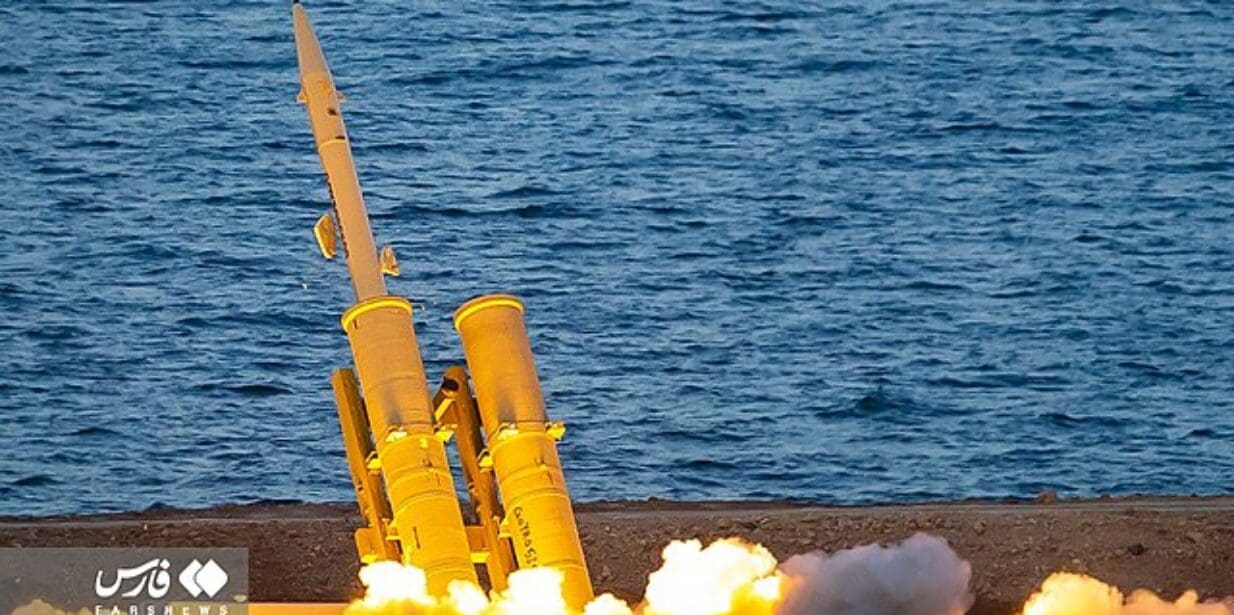
The Islamic Republic of Iran has the second largest reserves of natural gas, and the third largest reserves of oil, in the world. In the past thirty years, the country has received more than $1.4 trillion from the sale of oil alone. Yet in this resource-rich country, the people of Iran have been suffering economically. Today, over 40 million Iranians live in absolute poverty, and nearly 70 percent of the population falls below the relative poverty line. A university economist affiliated with the regime admitted that “a vast majority of Iranians are unable to meet even their most basic needs such as food and housing.” Poverty in Iran has become a matter of physical survival. Where did all that money go? More than $100 billion has been spent on Iran’s nuclear program. But far more — as much as $300 billion — has been spent on Iran’s ballistic missile program, including the enormous sums spent on underground missile cities. More on those missile cities can be found here.
The Iranian response to the March 2026 U.S.–Israeli air campaign underscores the scale and resilience of Iran’s missile capabilities. It has taken thousands of combat flights and hundreds of strikes on missile-related targets to begin degrading Tehran’s ability to project force across the Middle East and beyond.
The sheer extent of Iran’s missile infrastructure, much of it buried underground, is now becoming clear. One site southwest of the central city of Yazd is reportedly embedded in a granite mountain, with sections reaching depths of up to 1,500 feet. The complex is said to include rail tunnels capable of moving missiles to launch points and then withdrawing them into a maze of underground passages. Reports indicate that the site has been struck multiple times, with some damage inflicted but the core structure remaining intact.
ADVERTISEMENTAnother major “missile city” lies between Tehran and Karaj. Satellite imagery suggests a footprint comparable in size to Karaj itself, an urban area of nearly two million people.
According to available estimates, Iran maintains around ten major missile cities, alongside at least seventeen additional missile bases. Many are concentrated in western Iran, offering shorter flight times to Israel, and in the south along the Persian Gulf. These sites are believed to house between 2,500 and 6,000 ballistic missiles, in addition to an unknown number of cruise, anti-ship, and shorter-range systems capable of striking targets within a few hundred miles.
For years, the Islamic Revolutionary Guard Corps showcased images of these underground complexes, often featuring senior commanders touring vast tunnel networks. Many Iranians dismissed these displays as propaganda, assuming the same facilities were being recycled to project strength.
That assumption now appears to be wrong. Analysts long believed that Tehran had imposed a range ceiling of roughly 1,500 miles, sufficient to target Israel. Yet the launch of missiles toward the joint U.S.–British base at Diego Garcia—over 2,600 miles away—suggests the existence of longer-range systems, bringing much of Europe within Iran’s reach.
This realization has fueled domestic frustration. Many Iranians are increasingly critical of the resources devoted to missile infrastructure while the economy has deteriorated over the past two decades. Poverty has expanded significantly, particularly since 2018, when renewed U.S. sanctions followed Washington’s withdrawal from the nuclear agreement. Despite mounting economic pressure, the government continued to prioritize military capabilities and regional influence, including support for allied armed groups….
ADVERTISEMENT
The nuclear program alone has cost Iran more than $100 billion. More tens of billions have been spent on aid — weapons and money — given to Iran’s proxies and allies, including Hezbollah in Lebanon, Hamas in Gaza, the Houthis in Yemen, to pro-Iran Shia militias in Iraq and, during Syria’s civil war, to Bashar Assad.
The total cost of ballistic missiles and of the 27 underground “cities” where they are stored, and of the nuclear program (with nuclear enrichment sites built deep underground in Fordow, Natanz, and in Isfahan), as well as the aid given to Iran’s proxies and allies, amounts to almost $500 billion. This colossal sum represents more than one-third of the Islamic Republic of Iran’s total revenues during the last thirty years. Just imagine how well off the people of Iran, now so impoverished, would be if the mad mullahs had not been so determined on building, and hiding deep below the surface, so many weapons.
The Truth Must be Told
Your contribution supports independent journalism
Please take a moment to consider this. Now, more than ever, people are reading Geller Report for news they won't get anywhere else. But advertising revenues have all but disappeared. Google Adsense is the online advertising monopoly and they have banned us. Social media giants like Facebook and Twitter have blocked and shadow-banned our accounts. But we won't put up a paywall. Because never has the free world needed independent journalism more.
Everyone who reads our reporting knows the Geller Report covers the news the media won't. We cannot do our ground-breaking report without your support. We must continue to report on the global jihad and the left's war on freedom. Our readers’ contributions make that possible.
Geller Report's independent, investigative journalism takes a lot of time, money and hard work to produce. But we do it because we believe our work is critical in the fight for freedom and because it is your fight, too.
Please contribute here.

or
Make a monthly commitment to support The Geller Report – choose the option that suits you best.
ADVERTISEMENT
Quick note: We cannot do this without your support. Fact. Our work is made possible by you and only you. We receive no grants, government handouts, or major funding.Tech giants are shutting us down. You know this. Twitter, LinkedIn, Google Adsense, Pinterest permanently banned us. Facebook, Google search et al have shadow-banned, suspended and deleted us from your news feeds. They are disappearing us. But we are here.
Subscribe to Geller Report newsletter here— it’s free and it’s essential NOW when informed decision making and opinion is essential to America's survival. Share our posts on your social channels and with your email contacts. Fight the great fight.
Follow Pamela Geller on Gettr. I am there. click here.
Follow Pamela Geller on Trump's social media platform, Truth Social. It's open and free.
Remember, YOU make the work possible. If you can, please contribute to Geller Report.
Join The Conversation. Leave a Comment.
We have no tolerance for comments containing violence, racism, profanity, vulgarity, doxing, or discourteous behavior. If a comment is spammy or unhelpful, click the ... symbol to the right of the comment to let us know. Thank you for partnering with us to maintain fruitful conversation.