[ June 8, 2026 ]
I am an unapologetic supporter President Trump but he’s got it wrong on Iran. His continued attempts to negotiate with these savage as though they are rational partners will continue to end in failure, with America’s allies paying the price in blood.
Robert Spencer: The leaders of the Islamic Republic of Iran know that all they had to do in order to emerge victorious from this conflict was wait out the United States until the conflict became politically too costly, or potentially costly, for the Trump administration to pursue. And so now that they have the alleged leader of the free world groveling and continually giving the Islamic regime second and third and fourth and fifth and sixth and seventh chances to make a deal, they’re dictating terms: Not only are they to be allowed to continue their jihad against the U.S. and Israel, but they want to make sure that their proxy in Lebanon remains alive and in place as well.
Israel vs. Iran: Round 3
As Iran brazenly attacks the Israeli territory, Trump’s response has been found wanting.ADVERTISEMENTBy: Amit Segal, Jun 08, 2026:
It’s Monday, June 8, and the masquerade is over. After last night’s direct Iranian strikes on Israel, the fundamental question driving the last two months of “ceasefire” has been shoved into the open: who controls the post-Epic Fury status quo—Iran or the United States? For now, the answer is Iran.
Let’s run through the recent events:
- Sunday (~9:00 AM IDT): Hezbollah fires a barrage of rockets toward northern Israel, brazenly violating the ceasefire.
- Sunday (~3:15 PM IDT): Israel responds to the cross-border fire by conducting a targeted airstrike against a Hezbollah headquarters in the southern suburbs of Beirut.
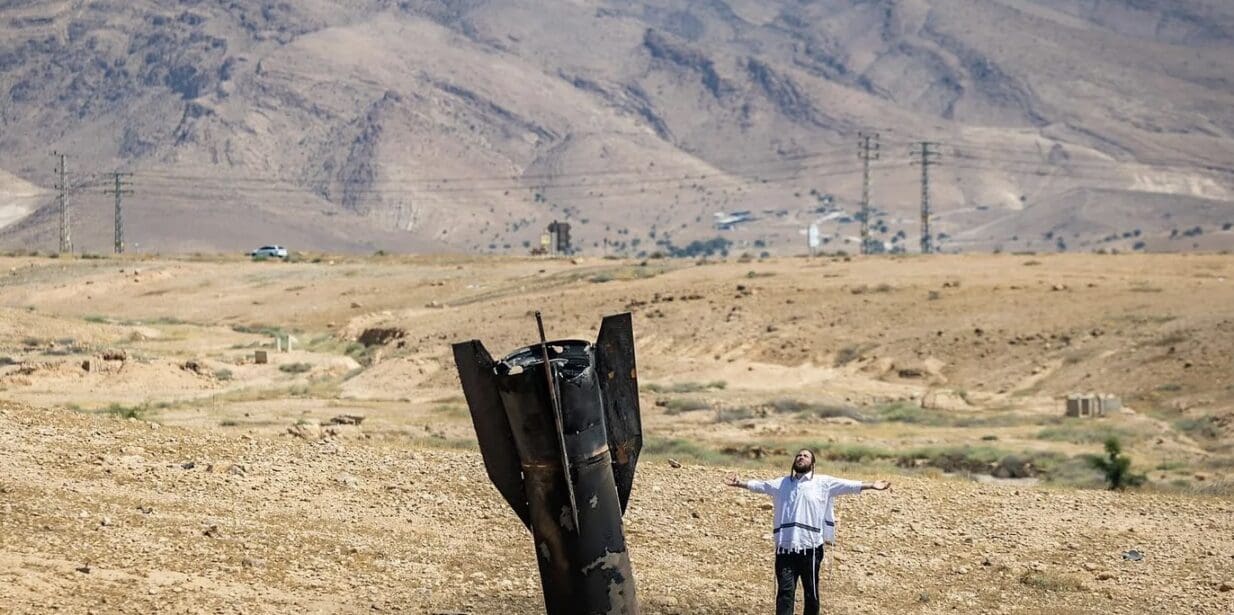
- Sunday (~10:00 PM IDT): Iran launches two waves of ballistic missiles targeting the Ramat David Air Base in northern Israel, declaring the strike direct retaliation for the Beirut bombing.
- Overnight: Trump speaks to the media asserting dominance over the situation. He tells the Financial Times that Netanyahu “doesn’t call the shots,” tells Axios “We don’t need another one,” and insists to NBC that his pending peace deal is still viable.
- Monday (~6:00 AM IDT): Air defense sirens wail across central Israel following a missile launch from the Houthis in Yemen. The projectile is successfully intercepted with no casualties reported.
- Monday (~7:00 AM IDT): It is officially announced that Israel launched a wave of retaliatory airstrikes on military targets and petrochemical facilities in central and western Iran, explicitly ignoring Trump’s pressure to stand down.
- Monday (~7:20 AM IDT): Loud explosions echo over Jerusalem as the IDF confirms it is actively intercepting a fresh wave of missiles launched from Iranian territory.
What made Tehran bold enough to strike directly?
The answer is Trump. Tehran may not field a first-class air force or navy, but they possess the absolute best detection equipment in the world for one specific signal: a lack of willingness to fight. For years, Hamas and Hezbollah detected this exact hesitation in Israel and exploited it to gain ground. Today, Iran is doing the exact same thing to the United States. It comes down to the old idiom: give them an inch, and they’ll start firing at a mile of your sovereign territory.
ADVERTISEMENTTwo months of projected American weakness and a blind obsession with securing a deal have brought us straight to this moment. The collapse started when Washington chose to look the other way during Iranian missile and drone launches in the Gulf. It accelerated every time the U.S. conceded ground just to keep Tehran from abandoning the talks, culminating in the immense pressure to hold Israel back from striking Beirut and the forcing of a hasty, fragile “ceasefire” in southern Lebanon. Tehran smells the desperation and knows exactly what the U.S. is terrified of losing. As an advisor to Supreme Leader Mojtaba Khamenei phrased it: “In the bombing in Beirut, the enemy set the negotiating table on fire for the third time.”
So far, it seems Iran guessed correctly. Overnight, Trump went on Fox News with a message for Tehran: “You’ve shot your missiles, that’s enough, get back to the table and make a deal.” In so many words, Trump is simply repackaging Joe Biden’s infamous April 2024 warning to Iran: “Don’t.” Judging by the multiple, separate ballistic barrages launched from Iranian territory this morning, it promises to be just as effective.
The situation is deeply reminiscent of the 1991 Gulf War, when President George H.W. Bush demanded that Israel refrain from responding to Saddam Hussein’s Scud attacks, pointing to the grander American campaign to handle the Iraqi threat. Israel ultimately capitulated, leading Prime Minister Yitzhak Shamir to famously admit that Jerusalem “had no alternative other than to work within the framework proposed by the Bush Administration”—a compliance that severely dented his security credentials and cost him the next election.
Today, Donald Trump is selling a similar illusion, claiming his diplomatic maneuvers will soon nullify the Iranian threat and Israel will just have to bare the rocky road to peace. But the 2026 reality diverges in one fatal way: it simply isn’t true. There is no “Great Scud Hunt” to blunt the threat, and no military campaign against the offending country appears imminent. If anything, it has never looked further away.
Rather than 1991, Israel seems to be back in 2024, facing an emboldened Axis of Resistance alone. But in 2026, Israel is handcuffed by an additional constraint: Washington’s hunger for a deal. Tied to U.S. diplomatic goals, Israel’s retaliatory strikes have been hollowed out. Yesterday, they hit evacuated headquarters in Dahiyeh; this morning, they hit secondary petrochemical sites in Mahshahr, deliberately leaving Iran’s critical energy infrastructure untouched. Israel is using a light touch because they are more scared of Trump’s reaction than Iran is.
But the collapse of deterrence is not just an Israeli problem. Iran is sprinting up the escalation ladder. If Tehran learns it can strike Israel with impunity, the next time they feel like throwing a tantrum, Gulf energy facilities will be in their crosshairs, followed closely by American military bases.
This vacuum of resolve also breathes new life into the Houthis. Judging by their statement after their participation in today’s strikes—“From this moment on, any Israeli maritime movement in the Red Sea is a target for attack”—they aren’t even bothering to uphold the pretext of defending Lebanon. The longer they operate without facing the full wrath of the U.S. military, the more their confidence builds, and the steeper the price will be when Washington is finally forced to intervene. If the Bab el-Mandeb Strait goes the way of Hormuz, the global market crash Trump has been desperately trying to avoid will inevitably manifest.
ADVERTISEMENT[…..]
There are three options going forward:
- Capitulation: Israel absorbs the latest attack, allowing Iran to establish a new normal of firing occasional missiles with no consequences. The fallout is immediate: Gulf allies lose faith in the U.S., and Tehran cements its regional hegemony. Iran walks into negotiations holding all the cards, having confirmed with absolute certainty that Washington will not return to military operations.
- Restoration of Deterrence: The U.S. and Israel strike back decisively, and Tehran decides to absorb the blow. This scenario reasserts American dominance over the region and stabilizes the Lebanese front by cementing the rule: any attack on the Israel’s north will be answered with devastation in Dahiyeh.
- Rapid Escalation: The third option, perhaps flowing from a failed attempt at option two, sees the U.S. respond and Iran—calculating that it will accelerate Trump’s capitulation—resume the war. However, a renewed exchange does not guarantee a drawn-out regional conflict on the scale of Operation Epic Fury. Given the exhausted target banks and the recognition that the regime cannot be overthrown from the air, this campaign may only last a few days before another ceasefire and a return to the status quo.
There is, however, a possibility that this highly public clash is all a carefully manufactured illusion—that Trump and Netanyahu have been secretly coordinating this entire masquerade to lull Tehran into a false sense of security before a devastating strike. But even if this is a brilliant game of geopolitical chess, the clock is ticking. Every moment these attacks go unanswered, the U.S. bleeds credibility, and the more fatal it becomes to Netanyahu’s electoral survival.
What we are witnessing is a complete strategic inversion. Since the ceasefire, the U.S. feared the Iranian front’s influence over Lebanon; today, the Lebanese front is dictating the actions of Iran. In a further twist, Hezbollah was built to be Iran’s forward defense, yet today, Tehran is stepping into the line of fire to protect its proxy—it’s like Trump jumping in front of a bullet to protect his security guards. Unless the U.S. and Israel inflict massive, unbearable costs for Tehran’s “heroic” sacrifice, Iran will simply repeat this action for every proxy in its arsenal. If that happens, restoring freedom of navigation from the Houthis, returning normalcy to Israel’s north, or securing any kind of future for Lebanon will be virtually impossible short of full regime change in Tehran.
The Truth Must be Told
Your contribution supports independent journalism
Please take a moment to consider this. Now, more than ever, people are reading Geller Report for news they won't get anywhere else. But advertising revenues have all but disappeared. Google Adsense is the online advertising monopoly and they have banned us. Social media giants like Facebook and Twitter have blocked and shadow-banned our accounts. But we won't put up a paywall. Because never has the free world needed independent journalism more.
Everyone who reads our reporting knows the Geller Report covers the news the media won't. We cannot do our ground-breaking report without your support. We must continue to report on the global jihad and the left's war on freedom. Our readers’ contributions make that possible.
Geller Report's independent, investigative journalism takes a lot of time, money and hard work to produce. But we do it because we believe our work is critical in the fight for freedom and because it is your fight, too.
Please contribute here.

or
Make a monthly commitment to support The Geller Report – choose the option that suits you best.
ADVERTISEMENT
Quick note: We cannot do this without your support. Fact. Our work is made possible by you and only you. We receive no grants, government handouts, or major funding.Tech giants are shutting us down. You know this. Twitter, LinkedIn, Google Adsense, Pinterest permanently banned us. Facebook, Google search et al have shadow-banned, suspended and deleted us from your news feeds. They are disappearing us. But we are here.
Subscribe to Geller Report newsletter here— it’s free and it’s essential NOW when informed decision making and opinion is essential to America's survival. Share our posts on your social channels and with your email contacts. Fight the great fight.
Follow Pamela Geller on Gettr. I am there. click here.
Follow Pamela Geller on Trump's social media platform, Truth Social. It's open and free.
Remember, YOU make the work possible. If you can, please contribute to Geller Report.
Join The Conversation. Leave a Comment.
We have no tolerance for comments containing violence, racism, profanity, vulgarity, doxing, or discourteous behavior. If a comment is spammy or unhelpful, click the ... symbol to the right of the comment to let us know. Thank you for partnering with us to maintain fruitful conversation.