Tonight’s Saturday Night Cinema classic Roberto Rossellini’s masterpiece Viaggio in Italia, Journey to Italy, stars then wife Ingrid Bergman. Their torrid affair scorched her career for close to a decade (but that for another post). Among the most influential films of the postwar era, Roberto Rossellini’s Journey to Italy (Viaggio in Italia) charts the declining marriage of a couple from England (Ingrid Bergman and George Sanders) on a trip in the countryside near Naples. More than just the anatomy of a relationship, Rossellini’s masterpiece is a heartrending work of emotion and spirituality. Considered a predecessor to the existentialist works of Michelangelo Antonioni and hailed as a groundbreaking modernist work by the legendary film journal Cahiers du cinéma, Journey to Italy is a breathtaking cinematic benchmark.
https://youtu.be/S0Mz5JZE8YQ
Revisiting a Rossellini Classic to Find Resonances of Today
Rossellini’s ‘Voyage to Italy,’ With Ingrid Bergman
Viaggio in Italia
ADVERTISEMENT
NYT Critics’ Pick Directed by Roberto Rossellini Drama, Romance Not Rated 1h 37m
By A. O. SCOTTAPRIL 30, 2013
Photo
George Sanders and Ingrid Bergman in “Voyage to Italy,” directed by Roberto Rossellini.Credit Janus Films
The 1950s are full of movies that were initially greeted, by critics and audiences, with indifference or derision, only to be hailed as masterpieces in hindsight. “Vertigo,” “The Searchers” and “The Sweet Smell of Success” are among the best-known examples of this kind of revisionism. Another, only slightly less famous, is Roberto Rossellini’s “Viaggio in Italia,” a film so maligned and neglected in 1955, the year of its American release, that it did not receive a review in The New York Times.
ADVERTISEMENT
Better late than never. A restored digital version of “Voyage to Italy” (one of several English titles that have been used over the years) begins a nine-day run at Film Forum on Wednesday, which seems as good an occasion as any to update the critical record. As it happens, the treachery of time — the unwelcome intrusion of the past, the empty languor of the present, the terrifying uncertainty of the future — is one of Rossellini’s themes, and part of what makes this film, for all its charming glimpses of a bygone era, feel so unnervingly contemporary.
Its failure no doubt had something to do with the scandal that embroiled the movie’s director and its star, Ingrid Bergman, and also with the ideological volatility of Italian cultural life. In 1948, after seeing “Paisan” and “Rome: Open City,” Bergman wrote Rossellini a letter offering her services if he should “need a Swedish actress who speaks English very well.” While making “Stromboli,” they began an affair that ended both of their marriages and provoked the highly selective moral outrage of the American press. In his own country, Rossellini was attacked less for marital infidelity than for betraying the cause of neorealism, allowing his camera to stray from local social problems to Hollywood stars.
And yet the reality of postwar Italy is very much visible in “Voyage,” as is a strong intimation of the direction of Italian cinema in the coming years. The film follows Katherine and Alex Joyce (Bergman and George Sanders), a British couple who arrive in Naples to sell a piece of property belonging to a recently deceased and highly enigmatic relative known as Uncle Homer. That business transaction is never concluded, and is in any case a distraction from the luxurious stasis that envelops Alex and Katherine, a state that might be described as a blend of ennui and la dolce farniente.
The two languish for a while at a hotel and at Uncle Homer’s villa, where the frosty state of their relations fails to melt in the Mediterranean sun. Katherine spends her days sightseeing in the Museum of Archaeology and experiencing a tremor of anxiety at the Cave of the Cumaean Sibyl. Alexander takes an excursion to Capri, where he flirts and socializes.
Sanders later complained that “the story of the film was never understood at any time, by anyone, least of all the audience when the picture was released.” And he had a point, even though he may have missed Rossellini’s. “Voyage” is not driven by the usual machinery of plot and exposition, but rather by a succession of moods, an emotional logic alternately reflected and obscured by the picturesque surroundings. The rich symbolism of the Italian landscape — the volcanic pools at Vesuvius, the ruins of Pompeii, the vistas that have stirred the imagination of artists at least since Virgil — makes the emptiness of the Joyces’ marriage all the more palpable and painful. Their emotional and spiritual sterility contrasts with the fertility signified by the baby carriages and pregnant women Katherine encounters every time she ventures into Naples, and also by the religious procession of the film’s devastating final scene.
Rossellini’s way of dissolving narrative into atmosphere, of locating drama in the unspoken inner lives of his characters, anticipates some of what Michelangelo Antonioni would do a few years later in “L’Avventura.” “Voyage to Italy” is thus in the vanguard of what Pauline Kael would disparagingly call “come-dressed-as-the-sick-soul-of-Europe parties.” Some of us will never tire of those soirees, with their black-tied gloom and elegant suffering, and will therefore relish the beauty and melancholy of this voyage, along with its touristic snapshots and heart-tugging Neapolitan songs.
The Joyces, though their manners and modes of dress mark them as creatures of another, perhaps more refined age, are immediately recognizable in their loneliness, their cynicism and their thwarted desire to connect and to feel. It may be too late. “Voyage to Italy” takes place in a series of simultaneous aftermaths — of World War II, of a glorious ancient civilization, of Uncle Homer’s wild life, of whatever passion once united Katherine and Alex. And yet amid all this exhaustion it finds signs of vitality. In its time, this film represented the arrival of something new, and even now it can feel like a bulletin from the future.
Please take a moment to consider this. Now, more than ever, people are reading Geller Report for news they won't get anywhere else. But advertising revenues have all but disappeared. Google Adsense is the online advertising monopoly and they have banned us. Social media giants like Facebook and Twitter have blocked and shadow-banned our accounts. But we won't put up a paywall. Because never has the free world needed independent journalism more.
Everyone who reads our reporting knows the Geller Report covers the news the media won't. We cannot do our ground-breaking report without your support. We must continue to report on the global jihad and the left's war on freedom. Our readers’ contributions make that possible.
Geller Report's independent, investigative journalism takes a lot of time, money and hard work to produce. But we do it because we believe our work is critical in the fight for freedom and because it is your fight, too.
Quick note: We cannot do this without your support. Fact. Our work is made possible by you
and only you. We receive no grants, government handouts, or major funding.Tech giants are shutting us down. You know this. Twitter, LinkedIn, Google Adsense, Pinterest permanently
banned us. Facebook, Google search et al have shadow-banned, suspended and deleted us from your news feeds.
They are disappearing us. But we are here.
Subscribe to Geller Report newsletter here— it’s free and it’s essential NOW when informed decision making and opinion is essential to America's survival.
Share our posts on your social channels and with your email contacts. Fight the great fight.
Remember, YOU make the work possible. If you can, please contribute to Geller Report.
Join The Conversation. Leave a Comment.
We have no tolerance for comments containing violence, racism, profanity, vulgarity, doxing, or discourteous behavior. If a comment is spammy or unhelpful, click the ... symbol to the right of the comment to let us know. Thank you for partnering with us to maintain fruitful conversation.
It is the conflict of our age, yet no one dares talk about it. The true story of the Islamic Supremacist war on free speech as told by those on the front lines fighting for our First Amendment rights,
.
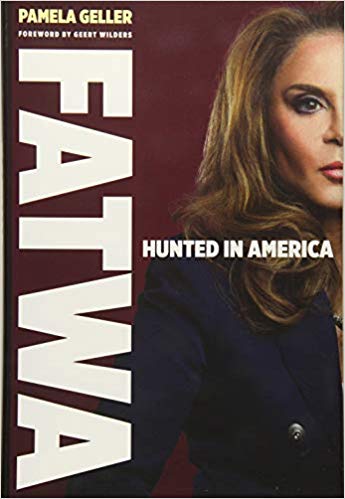
Pamela Geller tells her own story of how she became one of the world's foremost activists for the freedom of speech,
individual rights, and equality of rights for all. "It's my story, it's what happens when someone fights for freedom in America today,"
Geller explained.
Today Islamic supremacists are demanding more accommodation of Islamic principles
and practices than ever, and daily growing more aggressive in eroding our freedoms – with politically
correct public officials only too happy..
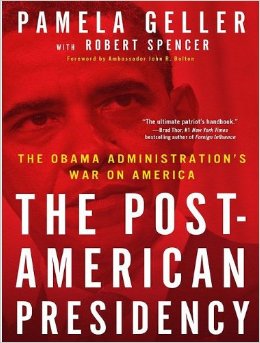
Popular conservative blogger Pamela Geller and New York Times bestselling author
Robert Spencer sound a wake-up call for Americans to stop the Obama administration from limiting our
hard-won...
The Ground Zero Mosque: The Second Wave of the 9/11 Attacks is a groundbreaking documentary on the controversy
over the planned Islamic supremacist mega-mosque at Ground Zero.



Tech giants are shutting us down. You know this. Twitter, LinkedIn, Google Adsense, Pinterest permanently banned us. Facebook, Google search et al have shadow-banned, suspended and deleted us from your news feeds. They are disappearing us. But we are here.